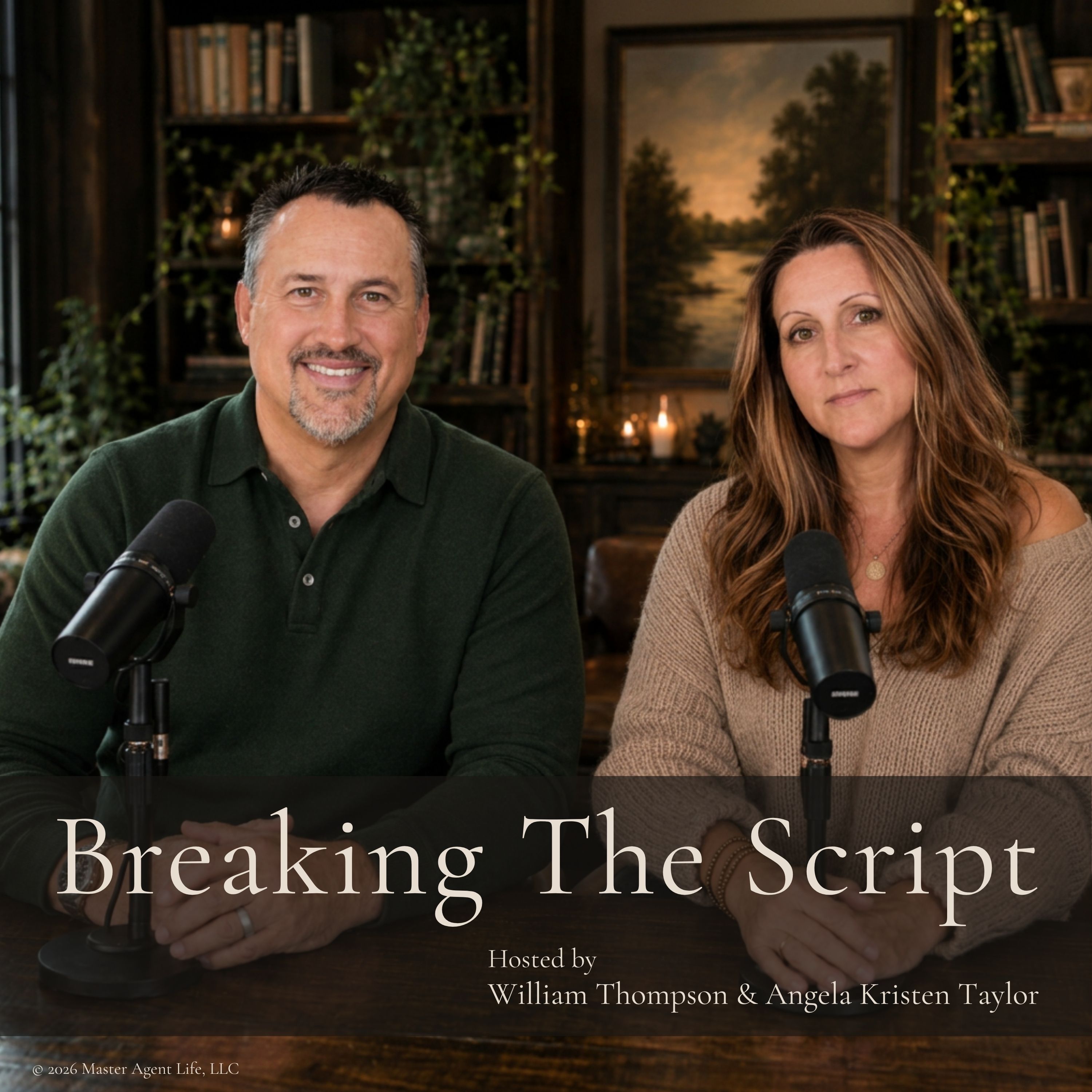
From Survival Mode to Showing Others the Way: Speedy's Story
Have you ever used every tool available to outrun the thing that was chasing you, only to realize the chase was always internal? Speedy Gonzales built his body to protect himself before he ever knew what anxiety was. He wore a badge at NASA before he understood why he kept waiting for everything to fall apart. He lost control of his life in plain sight before he finally decided to take it back.
In this episode, Angela sits down with Walter "Speedy" Gonzales, Louisiana Managing Broker and VP of Broker Operations at ENRG Realty, to trace the through-line from a high-crime childhood in New Orleans to the identity he carries today. Speedy opens up about growing up in an environment where physical size was a survival strategy, the crippling anxiety he carried through his years in NASA law enforcement, and the imposter syndrome that followed him from badge to briefcase. He also gets real about the years when real estate stress drove him to drinking five to six days a week, the moment his car was repossessed while money sat in his bank account, and the decision that finally shifted everything. The 75 Hard program became a turning point, but the deeper work was learning to stop blaming his past and start taking radical ownership of his present. This episode is for every agent, leader, or human who has ever wondered whether their struggles disqualify them, or whether those same struggles might be exactly the thing that makes them worth listening to.
Takeaways:
- Imposter syndrome doesn't mean you're failing. It often means you're stepping into something that actually matters.
- The coping mechanisms we develop to survive can quietly become the thing that holds us back.
- Taking personal responsibility is not about ignoring your past. It's about refusing to let it make decisions for you.
- The experiences that feel like wasted time are often the ones building the foundation for everything that comes next.
- Recovery is not a single moment. It's a decision you keep making until it becomes who you are.
- What you've lived through doesn't disqualify you as a leader. For the right people, it's exactly why they'll trust you.
About the Guest Walter "Speedy" Gonzales is the Louisiana Managing Broker and VP of Broker Operations for ENRG Realty. With a background that spans NASA law enforcement, direct sales, and multiple real estate brokerages, Speedy brings a rare combination of leadership experience and hard-won personal growth to his work with agents. His journey through anxiety, imposter syndrome, and recovery shapes the way he leads and the example he sets for the agents around him. Connect with Speedy on LinkedIn or visit his website.
About Breaking the Script Breaking the Script is a podcast about the real obstacles agents face, the ones that don't show up in training manuals or production dashboards. Hosted by Angela Kristen Taylor, managing state broker in Georgia for ENRG Realty and creator of The Rooted Agent Method, the show explores how personal history, pressure, identity, and unspoken expectations shape the way agents work, perform, and experience success. Connect with Angela on LinkedIn.
Transcript
You're listening to Breaking the Script. I'm Angela Kristen Taylor. This isn't another real estate podcast about tactics, market trends, or the next lead generation strategy.
This is where real estate agents talk candidly about what actually gets in the way.
The pressure we carry, the personal history that shows up in our business, the parts of ourselves that complicate how we work, the things nobody talks about. Because success in this business, it isn't just about knowing what to do.
It's about understanding why we can't seem to do it consistently, even when we know better. So let's go off script and talk about the real obstacles. Foreign. So thank you for joining us.
And today we have Walter Gonzalez, fondly known and referred to as Speedy. Yes, thanks for being here today. I always appreciate this.
So Speedy and I work together at Energy and I would love for you to just introduce yourself and tell everybody who you are.
Speedy:Sure. So my name is Walter, like Angela said, affectionately known as Speedy Gonzalez. It's, I get asked about that a lot.
It's a childhood nickname and there's an inner, there's a fight or a turmoil inside my family as to who gave me that nickname. So a lot of my, my grandparents specifically would argue like, oh no, I'm the one that named you.
I've heard like four or five people gave me that nickname. So I don't know who actually did it, but it was just a childhood nickname that just stuck with me. So.
So much so that my aunts, uncles, my dad who was named Walter, who named me Walter, calls me Speedy. So y, that's just a nickname that stuck. I was born and raised in New Orleans, Louisiana.
I was born in hotel do, which believe it or not, was a hospital in New Orleans. It was not, not a hotel.
But yeah, I spent a majority of my life here in the, in the New Orleans area with a little bit of a few years I lived in Alabama but then moved back to New Orleans. As I currently sit, I am, what, 44 years old. I've been in real estate now for over 10 years.
I've been in self employed sales for 15 years and have a background in law enforcement at NASA before I got into sales. I am married with three girls, 24, 21 and 15. Which is crazy to say out loud, but yeah, that's a little bit about me and who I am.
As you know, currently as, as we sit here and talk.
Angela:Awesome.
So why don't you, I, I'd love to hear you tell everyone a little bit more about what you do now and then we'll talk a little bit about, you know, your journey and how you came here.
And as you guys listening know, you know, a lot of the reason that I'm doing this in, in general, even running this podcast is just so that we can normalize the con.
The conversations that usually people don't want to have, you know, the conversations that share the journey behind success, what actually happens behind the scenes.
And what I love about Speedy Story specifically is that he shares a lot of very similar, you know, issues and things with anxiety and things like that that I've dealt with my entire life.
And we don't always realize the strength that we have going through those experiences and still getting ourselves to a level of success that we're happy with. So why don't you share with everybody kind of, you know, where you are now, and then we can take it back.
Speedy:Absolutely.
So, yeah, currently I'm the Louisiana State broker for Energy Realty, the managing broker, and also the V or vice president of broker operations for the company. And, yeah, I've been a broker now for about four or five years, and I could have gotten my license a lot sooner, but I didn't have to because my.
My partner, we. We ran Second Line Realty, a local boutique company.
Before that, he got his broker's license first, and so therefore, I really didn't have to get it until he. He told me he was going to be moving to Florida and putting me in charge of the company.
So I was like, all right, let me go ahead and get my broker's license. So, yeah, managing broker now for four or five years, but I could have got it way sooner.
I just didn't have to until my partner was like, hey, go ahead and pony up and get it.
And, you know, a lot of, you know, since we talk, since we're going to talk about this anyway, like, a lot of imposter syndrome coming with that, too. Like, am I qualified to do this? Am I. Do I know enough? And still just choosing to act and operate and figure it out is going to be the theme here.
Angela:Yeah, absolutely. Absolutely. And, you know, that's interesting that you say that around imposter syndrome and getting your broker's license sort of later on. Right?
You know, I've been in real estate for forever, it feels like, and I never got my broker's license until, you know, a few years ago. And it was just because I didn't. I didn't have any need to have it.
And it's interesting because I see a lot of agents will move forward and get different licenses or certifications and kind of rack up everything they can because they feel like they don't know enough. And they think if I take this class or I take this certification, then I'll know more, then I'm more capable.
And the truth is, a lot of times, even when we have all these classes and licenses and certifications behind us, we still feel like that. Right?
So, yeah, the broker's license is great if you need it, but if you don't need it, it's, it's not necessarily something that's going to necessarily teach you something that you didn't already know if you're out there in the world of real estate in general.
Speedy:So I would, I would agree with that. Yeah, a hundred percent.
Angela:So why don't you tell us your story? Tell us your story.
Speedy:Okay. So like I said before, I was born and raised in New Orleans. Very interesting growing up and being born and raised here.
Obviously a lot of people from the outside might know the culture and the French Quarter and the partying and Mardi Gras. So that was a big part of my upbringing.
And I came into adolescence growing up in New Orleans east, which was really nice, but, you know, kind of spotty area. It's. And that's a lot of.
I guess where I'm, I guess where I'm just diving into that right now is like, there's a lot of fear that came out of my childhood from, from growing up in that environment. It was, you know, there was times when I was, me and my friends were just walking down the street and got shot at for no apparent reason.
They weren't trying to shoot at us, they were just shooting a butt like over our head to scare us. So, yeah, it's pretty, it's interesting to grow up in that environment.
So I bring all that, you know, all this anxiety and all this fear out of childhood and I can 100%, like honestly tell you that that shaped who I am today. And, and that like, you know, when I became a teenager, I got really into weightlifting and power lifting.
And as I said, I'm like 260 pounds right now.
Mostly, you know, I'm a little fluffy, but I got, you know, I'm still pretty strong and big and I know like just from self reflection that I, I created this Persona now out of that childhood fear that, that I grew up in. Like, I, I was scared and undersized and small because I started school early.
So I, to give you Context, I was 16 at the beginning of my senior year and graduated when I was 17. And yeah, so it's, I brought, you know, that fear from childhood into the man I am today, which is good and bad, right?
It's good because I, I took action and did something about it and created like this Persona that from, from the outside looking in, like, you know, I guess I created this thing like, you know, don't, don't mess with this guy. Because it really came from like an internal fear of childhood and, and feeling scared all the time.
Angela:Can I just interject really quick because that, that is such a really great point that you're making right now.
And I kind of want to just solidify that because you came out of a childhood where safety was a problem, you didn't feel safe, and it was this like you're saying, spotty. So what I'm hearing with that is that, you know, there was good, there was bad. It was kind of a little bit of a mix of everything.
So what that creates is, I don't know what to expect. I have to be prepared for everything. And then what you did to respond to that was you started working out.
You're like, I'm going to lift weights, I'm going to be strong. I'm going to create a physical barrier between me and anything in my environment that could potentially harm me.
And so that's really relevant to speak to because I think a lot of us do that and we'll do it in different ways. And one of the ways that people do that is actually to put weight on. And so I know you said fluffy, I'm super cute, I'm fluffy.
But the thing is, you're not. You're very muscular and strong and it's very visible when you're looking at you.
And of course, this is an audio only podcast that people aren't looking, they don't know. But I've met you many times, so I could say that.
But the effect that people are creating to put a physical barrier between them and anything that they feel could harm them is a real thing. And that's something that happens a lot. So if you're listening to this right now and you're thinking, do I do that?
If you grew up in an environment where you felt like you weren't always safe and it doesn't have to be physical harm, like being shot at or shot above you, right.
It can also be, you know, emotional harm, verbal abuse, any of those things, being raised by a narcissistic parent, all of those things can create that same reaction in your nervous system. I need to create A barrier. I need to create a block here between me and what could potentially harm me.
Speedy:Yeah, a hundred percent. Yeah. No, no, it's, no, you're right. It's a, it's a physical.
It's not like I didn't turn into like this mean person that just goes around and like starts fights or bullies people.
I turned, it was a physical Persona that I created that would be a repellent to anybody who might want to, to mess with me or, you know, and it a hundred percent works. Like I've, I, I've been out in bar environments when I was in my 20s and my wife would point to me at a bar and be like, oh, that's my husband.
And everybody be like, that's your husband. Like, so it worked. To be fair, it worked.
And honestly, I didn't, I didn't realize I was doing it until I got a little bit deeper into personal development and, and self awareness and realizing why we do the things we do. And that's the key, right, is tapping into not only, okay, what, what, what habits do I have? What, what am I creating right now?
What does my life look like and why? You know, it really takes self reflection. Why am I this way? Why did I, why am I doing this? And that's good or bad, right?
Like I, I decided to do, you know, go the physical and strength, right?
But other people might do something more harmful and you know, become really obese or uh, you know, and they think it's just like, oh, I have a problem with food, I have a problem with diet. It's like, no, there's something else going on. You know what to do 100%, you know what to do.
There's something else going on you need to figure out and pull the roots out. Um, so yeah, but now my story after that it was, I really wasn't sure what I wanted to do with, with my life, to be honest with you.
Like, I just watched my brother graduate from high school a few years before me. He took on a bunch of student loan debt to, to get a degree. He ended up not finishing college.
And I remember, you know, he was starting to get a lot of bill like calls from bill collectors, like, hey, you know, you owe us this money on this loan. And I wasn't sure.
I was like, okay, well I, I don't know what I want to do in life enough to sign up for this, you know, six figure debt just to go to college. Say I went to college. So I took the year off plan, right? Like I'm gonna just take a year off and think about stuff.
I eventually got a job doing AC work. So H vac I did, I was a helper for, for AC company. And this is the only hand up in life I could truly say I got.
There was, there was a job opening for security at the NASA facility in New Orleans. My father in law worked there, was highly respected safety, safety rep out there with a lot of connections.
He knew I wasn't, you know, entirely thrilled with doing AC work, although I did, you know, there was a lot of that because I learned a lot about hard work, like what real labor, hard grunt work is. So I have a lot of respect for everybody in that industry.
But the only hand up I would say I got in life was, was my, my father in law working out there because I got the job out there when I was 21. I had no security background, no, no, nothing background. Just all I had was H Vac work and a high school diploma.
So I got that opportunity, but still I had to seize that opportunity. Right. I mean a hand up or you know is only going to get you so far if you don't, if you don't fulfill your end of the bargain.
So I went through, you know, they do give you like three months of training before they throw you out there. So it's not like, oh, here's a security badge and a gun. Go go out there and be somebody.
So I went through three months of first responder training because we also had a fire department. We ran, we did the, we ran the ambulance and security.
So obviously that comes with firearms training, all the fun stuff that comes along with, with law enforcement and, and yeah, and so I would say that was the start of my professional career was at the age of 21 by getting that opportunity that I seized. Yeah, that's, that's, that's, that's leading up to 21 years old there is where we're at.
Angela:All right, so now you were talking to me a little bit about before we, we started recording about the experience of imposter syndrome that you had in that environment.
So even though this isn't real estate specific yet, I, I really want you to talk about that because that's something that it, well, I'll say more about it once you, once you go into it because I had a very similar experience for me, but mine was in real estate because I started so young. So let's, let's hear what, what you experienced there.
Speedy:Absolutely. So at first just excited, right, because you're in a NASA facility there's all this cool stuff all over the place.
So at first it was of excitement and learning.
And then the real work starts when they strap a gun on you and put you on post and all of a sudden you're a 21 year old kid, you have a firearm on your side, handcuffs, the whole nine yards, you know, the little retractable baton. And you're trained on how to neutralize a threat. And then you're like, oh my God, like there might be a threat I have to neutralize.
This just got real and you know, but I just kept, I just kept going and all through that time, So I was 21.
Anything that I do that I really take an interest in, like, I just, I, I, I do have a gift of just like excelling at whatever I find interesting because I'm just too, I guess I'm just too hard headed to say no. And which, which would really shock you when I tell you what was happening to me all through, during that time. Again, I don't know how I did it.
I just, I just kept going. So at 25, I became the, the, the sergeant over the fire department, which the fire department side was actually terrifying training to go through.
Like it's a, you go to, it's a, a maritime fire facility and you have to actively put out fires. It's a controlled environment. They, you know, it's diesel drums and big diesel pitch you have to do, you have to put out.
But it's, it's a very terrifying training that there's one specifically called Hell Hole where they light six drums on fire.
They close all the windows and doors to the thing and then they open it up and you have to go in there with a hose and a team and you can't see anything. You can't see the, you can't see the fire until you're like three feet away from it.
You just know which rooms are in because instructors do tell you, hey look, these are the rooms the fires are in. So you have to open up, open up doors blind, can't see anything.
And actually during that training, it was my initial training, I was the support person on the nozzle, which is the person that's behind the nozzle person. And all of a sudden I felt a lot of pressure on, on my, my end of the bargain.
And I saw, I barely saw a silhouette of somebody running past me, meaning the person holding the nozzle dropped it and ran out of the building. So I had to fall on the hose. And they teach you to, luckily they teach you what to do before this, this have a suspicion somebody might do this.
You have to, you have a hose that is now whipping around and this hose that, this nozzle on this hose could absolutely crack you in the head and knock you unconscious or worse.
So I'm laying on the hose army crawling, inching forward to the nozzle head to, to the point where I can get it, control it and then start putting fires out. So that's, that's my introduction into NASA. So it wasn't just security and first responder stuff for running an ambulance.
It's also fire training you have to do because we were a self contained fac. You're, we're miles away from a police department or a fire department. We were all of that.
So yeah, that was my introduction into, into fire training which is still to. Even when I went to do like the refreshers every year, it was still terror.
It's still terrifying and it's just learning to operate with, with the fear and not, you know, it's never going to be a situation where you're not afraid. But anyway. 25 Became sergeant over the fire department.
And when I, when I initially joined out there it was, it was transitioning to more of a police department or law enforcement because it was also a terrorist target. It was like a little bit after 911 when I joined and that was also considered a terrorist target.
So they were transitioning to more of a, a full official police force.
So I became, also became a federal police officer out there with Nephilit training academy which is like a three month academy you have to go through the first two weeks are constitutional law which if you ever need a good nap you could read through that material. Good God.
That was the, that was the by far the worst part of the, of the training but obviously a necessity to understand constitutional law and title 18 which I think is what we did out there if my memory serves correctly. And then from 26 to 29 I was just law enforcement side. So I went to straight law enforcement and became lieutenant by the time I was 21. I'm sorry 29.
And then it was decision time because I realized I was pretty capped out with where I was.
And you know the only two positions above me was investigator which I had zero interest in investigating where missing government things had had gone. If anybody stole something out there trying to track it down or chief, which is the chief over the entire security operations.
So I could have been sitting there waiting for another five, five to 10 years for a position open up above me and who's to say would even go to me if it, if it did. And I was making good money for law enforcement. It was like, you know, 25, $26 an hour. Which is, wasn't bad back then for, for law enforcement.
You're not going to go to NOPD and get that. But unsatisfied on, on it was not gratifying work.
I love the people I worked with and I love the, you know, just the camaraderie of the, the age or said agents, the team out there, the, the officers. But wildly unfulfilling because it really only took me like 30 minutes a day to do my actual job job.
The rest was just sitting around and hoping nothing happened. So anyway, all our, all during that time. Yes, Angela.
Dealing with imposter syndrome because I'm a kid like looking back like you feel like you're, you're grown, but I was looking back now it's like, Jesus, I was a 25, I was a 20 something year old kid who was just dumb enough or brave enough to put his hand up and say, oh yeah, I'll take, I'll, I'll interview for this promotion.
And I'm not, to be honest with you, I'm not sure if I got the promotion because I was most qualified or I was the only one that said yes, but, but it didn't matter to me. But yeah, all during that time, which was, which is going to sound pretty wild but dealing with.
At, at some points it would come and go, but at some points crippling, almost debilitating anxiety. There were times like I had to kit. I would, I would ask, I would call the next shift lieutenant and say hey, can you come in four hours early?
I have something to do. But I was really like, I was panicking. I was having anxiety attacks out there and nobody would probably ever know that. But yeah, it was.
So I don't know if it was something just going on with misalignment with me or I don't think it was the imposter syndrome at that point. There was just something going on and couldn't figure it out. Go ahead.
Angela:I've heard you tell this story before and I don't know what the difference is now as opposed to other times that I've heard you say this, but I'm picking up a pattern here that's interesting. I want to throw this at you and hear what your perspective is on it.
But you had just said that a big part of your role at that job was to sit around and hope that nothing Happened.
Speedy:Yeah.
Angela:And that you had debilitating anxiety through that experience.
Speedy:Yes.
Angela:And it's interesting because it's very reflective of your childhood where there was always that potential threat, but it. You didn't know. So there was always this, I hope nothing happens. I hope nothing happens.
And then you're in a job where literally your job is to say, I hope nothing happens.
Speedy:Yeah. To wait on something catastrophic.
Angela:Yes. But knowing. Knowing that eventually something will. That's why you're there.
Just like you knew as a kid, eventually something will because it just does.
Speedy:Right.
Angela:So it's almost like your childhood and then your job insecurity, they reflected the same experience to you. I'm hoping that nothing bad happens, but I know something will, and I'm prepared for it.
But now I've put myself in the line of fire directly that I'm the person responsible to take care of it if it does or when it does.
Speedy:Right.
Angela:So I can imagine there would be a huge amount of anxiety coming from that because now you've just made yourself responsible for taking care of all those other people there and not just yourself, the way you had to as a kid.
Speedy:Right.
Angela:So it's almost like you took the. The childhood situation and, like, made it bigger.
Speedy:Right? Yeah. That's interesting. And. Yeah, that's a very interesting way to look at it.
And now, upon reflection, it's like, did I purposely put myself in that environment to be in a position to where I could be in more control of thing, of things happening to me or happening around me, but still also at certain points, succumbing to the pressure and anxiety of that situation? And it wasn't always. It was just a few times.
There was like five or six times where I've really lost control out there and had to call in and, like, act sick or act like, hey, man, I got. I really got something to do. Something happened. But I was really at that point just in a tailspin. But now. Yeah, that's a very interesting take on it.
I've never. I've never thought about it that way, but 100% makes sense to me now.
Angela:Yeah. Yeah. That's why I said it didn't.
It hadn't occurred to me before, but just something in the way we're connecting these two things back to back, that it just lit up. Yeah. It's interesting.
And I like your point about it, you know, about it being a form of control, being in that role, because the role, actually, just like you said as a kid that you felt like you were small and so you bulked up, right? And you worked out and made yourself strong and you took on this Persona of a don't mess with me, you know, like I'm hard kind of thing, right?
And then you go into this role where you take on this added responsibility, but in exchange, they gave you all these tools and resources and education experience to prepare yourself for anything major going wrong. And so it's almost like it did give you a sense of control, but also put you into a much higher level version of what you had experienced as a kid.
So it's interesting because now I'm looking at that and saying, what was that preparing you for? Because it almost looks like a stepping stone at this point, right?
A stepping stone in the I'm here to protect, I'm here to serve, I'm here to show up and make sure nothing goes wrong. And then look at how what happened when you stepped into real estate, right?
Speedy:Yeah, yeah, I've already thought of. Yeah, absolutely.
I've already thought about the, the stepping stone of what that meant to me because when I was in the middle of it and transitioning out of NASA and going into self employed sales, which is a funny story as to how that happened. I, look, I, I honestly looked at those eight to nine years I spent out at the NASA facility as wasted time.
I was like, oh man, I should have gotten to sales sooner. I should have gotten a real estate sooner.
I really did for, for a long time look at that period of my life as like lost, like, you know, wasted time or for lack of a better term.
But now looking back at it, I learned so much about myself and pushing myself and leadership out there because it's not just me and what I dealt with personally, you're also dealing with. I think we had close to 60 to 70 at some points, 80 officer out there upon working all different shifts.
And these guys and, and ladies were, you know, some of them retired military, retired nopd. Like they've been to war and seen things and I'm just this ambitious kid, just saying, oh yeah, I'll figure this job out.
But I had, I learned a lot about leadership out there because I learned very quickly that you're not gonna, you're not gonna get these, per these people's respect by pointing at your badge and saying, I'm a sergeant now. And you got to listen to me. I never forgot where I came from. I never forgot that I was them and I treated them as such.
I treated them with the same respect that I would want to get in return. And I You know, I could be wrong, but I think I was one of the most respected and, and beloved sergeants and. Or lieutenants out there. Not in.
Not in a sense of like, oh, speedy, you know, he's super nice guy. He'll let us get away with anything. I held the line.
And if something, you know, happened or if I had to write up an officer or fire somebody like that, that. Unfortunately, that took place too. But I always did it with a sense of earning people's respect, not demanding it.
And, and when you get into real estate, guess what? You have to deal with a lot of different personalities.
A lot of different personalities and a lot of different situations where you have to learn what's going on on the other person's side of the fence, meet them where they are, and. And again, gain their respect, not demand it because you're. You're the professional, or I have the license here, and you have to listen to me.
It's like, no, you have to back it down and, and meet them where they are and, and control the situation and. And that. Yeah. So I learned a lot about.
Again, if you don't see it at the time, and what I would say to anybody that's listening is whatever you're going through, whatever career path you might be on or wasted, if you have a similar story where you feel like you wasted time, I would beg to differ. I think you learned a lot more during that season of your life than you give yourself credit for.
And there was a reason you went through those things, and you can find that reason and, and turn it to the good.
Angela:So, yeah, I agree with that 100%.
And, and this is something that I was alluding to earlier is the imposter syndrome that we feel when we come into something young and we see all of these older people around us, you know, doing things and, and feeling like, you know, how do we fit in? Who are we to, you know, speak to them about, you know, this or that or whatever.
And when I got into real estate, I was 19, and I got my license when I was 21, so I worked as an assistant for two years.
And when I got my license, I was still like, you know, you think of a kid that's 21 years old now, I have four kids that are older than that, and to me, they're still children.
So at the time I thought, how are people going to ever take me seriously or think that I'm experienced enough to help them buy or sell a home when, you know, they looked at me and they would say, oh, you're just a little girl, or you sound like a little girl. How much experience could you possibly have? And nobody actually ever said that to me, but it was what I perceived.
It was the imposter syndrome that I felt, feeling like that I could take care of somebody in that way and know what I was doing.
And, you know, kind of going back to that childhood piece, right, where we feel this imposter syndrome, a lot of times we're feeling that because something in our childhood that we've experienced has said that we're not capable.
You know, and a lot of what I experienced were parents telling me, teachers telling me that I was not capable, that I was doing everything wrong, right? And so then that would be reflected in how I felt. People would see me as the real estate agent. Now, it wasn't true, and I did just fine.
But, you know, really having to work through that, because that was the feeling that was happening before I picked up the phone to make a call, before I had to reach out to someone, you know, and it's just like, you, you're a young kid and you're walking around, you've got a firearm on your belt, and you're walking around hoping that nothing bad happens, and knowing that you're prepared in case something does, and you're feeling the weight of that responsibility, and you're wondering, what am I going to do when this really happens?
But just like with the fire hose experiment, you know, experience that you had in training, there's like, when something happens, you kick into gear because you're prepared, because you do know what you're doing. It's just that feeling that's inside of us that's telling us that we can't.
Speedy:Yeah, absolutely. And while you were talking, I thought about something.
Another interesting way to look at imposter syndrome is I forget who it was, but there's like, a highly respected, either entrepreneur or celebrity recently that. That said in a podcast that they still have imposter syndrome to this day.
And if you'd look at this person from the outside, you'd be like, there is zero chance you should have that. But when you. When you were talking, I was actually thinking, like, if you're not.
If you're not putting yourself in a situation where you might feel like some sort of imposter syndrome, I don't think you're playing the game big enough. Because the. The opposite of imposter syndrome would be egocentric or it would be. It would be bad. Right. If you.
If you're in a situation where you feel like you got it all figured out and you know everything.
You're either really lying to yourself and delusional or you're not playing or you're not really putting yourself in a position where you, you should feel those feelings, but learn how to operate through them. Like, I don't think you should ever not have some form of imposter syndrome. I think it also keeps you sharp.
I think it, you know, if you really like, if you don't let it look, there's a bad side to this, right? Like, you could let it really beat you down. Or you can choose to say, you know what? I don't have all the answers. I don't know everything.
And that's okay. I can still operate and I can always be resourceful enough to find out the right answers.
If something comes my way or pops up that I don't know, I can figure it out. I'm resourceful enough to do that. So that's just something I thought of while you were talking.
It's like, I don't think if you don't have some form of slight imposter syndrome, I don't think you're really pushing yourself enough.
Angela:No, I would agree with that. You know, and I, I also think that when we look at where we feel imposter syndrome, I think that it's pointing us in a direction.
It's almost like, follow where you're scared because it's going to take you where you're meant to go. Because if it doesn't scare you, it's. It's safe, right? It's safe. But it doesn't, it doesn't actually take you anywhere.
But when you work through your fear and you're, you're doing something, it's. I, I don't like saying, you know, oh, you're scared. Do it anyway, kind of thing. Because I don't want to bypass people's emotions, right?
I think that's, that's damaging. But when we, when we say I am scared, and then we say, okay, does that mean that this is good or bad?
You know, and then looking at it and saying, well, in this case, because it could be different in any given situation, but in this case, we're going to say, I feel scared because this would actually be amazing. I could actually do something really incredible here. And it, it feels scary because I don't know if I can do it or not.
I don't, I don't want to look like a fool. I don't want to let someone down. And when we feel that fear.
That's usually the fear we need to move in that direction towards it, because that's telling us where we need to go, what we need to do next, and where that's going to take us. It's interesting. I don't know why this is coming to my head, but have you ever seen that show? It's on. It's a sci fi show. It's called Surreal Estate.
Speedy:No.
Angela:Okay. We found this recently. So anybody who's listening has watched this. There's three seasons. I'm like five.
Five episodes into season one, you know, but it's about this guy, and he's in real estate, but he has his own brokerage and they focus in on real estate that has specific types of problems, very, very specifically, like metaphysical ghostly phenomenon things, hauntings, things like that, you know. And so he specializes on clearing the property and then selling it. So whether it were in the past, it would have like, sat on the market.
Nothing happened because people were scared or whatever, you know, had bad stigma attached to it. He, like clears the. The. The property and then is able to sell it for top dollar and get competing offers, you know.
Speedy:Yeah, I might have to check that out. That sounds great.
Angela:It's really bad acting, but like a really fun show. And all of their real estate stuff. I'm constantly yelling at the screen like, that's not how real estate works.
They didn't have a good experiment expert on set.
Speedy:Right.
Angela:But the. The show is fun, but yeah, it's interesting.
I don't even know where I was going with that now, but there was an episode last night where they were having to kind of, you know, battle through fear. And it was one of those things where he was given.
The lead character in the show was given an option to stay safe or to, you know, move forward in all the risk that life brings. And he said that something about, like. Something about like your.
Your ship is safe only in the harbor, you know, and that he didn't want to be in the harbor. And so he was like, willing to take the risk, willing to move forward and live life anyway, regardless of what would happen.
And so I think a lot of times, you know, we're presented with that exact same same thing, you know, is, are we just going to keep our ship in the harbor and stay safe or are we going to venture out to sea?
And ultimately, a ship was built to venture out to sea, not to stay in the harbor, you know, and I love that analogy because it's very indicative of how we live our lives. You know, are we just gonna stay in one place and never do anything, never go anywhere, never experience life?
Or are we going to take everything that life hands us and say, well, this part's great. This part. And, ooh, that sucks. You know, whatever, right? We're dealing with it and we're experiencing all of that life has to offer.
Speedy:Yeah. Yeah, I like that. I like that. And, yeah, and that's, that's, you know, you saying that. I just wanted to provide a disclaimer.
It's like, yes, when we say, like, feel the fear and do it anyway, that requires discernment. Right? Like, okay, is this really a bad situation that I need to get myself out of? Or am I like to use this term? Or am I punking out? Am I, am I.
Okay, is this really, like, out of alignment with what I want to be? And if so, then. Then obviously don't take that route?
Or am I trying to talk myself out of doing something that's in my best interest that I just don't want to do because I'm fear of the outcome. I'm fearful I might not be able to figure it out or the imposter syndrome thing.
And like you were saying, that's the thing you need to lean into because that's where self development and self growth happens. But, yes, it does require discernment.
We don't want to just feel the fear and do it anyway, because what if it's a bad thing and you're just like, you know, this guy on a podcast told me to feel this and do it anyway, and you get, you know, you completely ruin your life or your finances or your business. Like, no, it requires discernment.
And, and knowing whether or not you're really leaning away from something that's dangerous or you're just punking out because you don't want to take this chance. Or, sir, if you can figure this thing out. So, yes, I just wanted to comment on that.
Angela:Yeah, absolutely. So, all right, I want to be mindful of your time, so let's keep. We've got about eight minutes left.
So I want to hear more about some of the things that you've experienced that you feel like, have gotten you to where you are today and what was the emotion behind it?
Because I think that's the, you know, the biggest thing that I want realtors to, or real estate agents really to come come to terms with is that we all feel these feelings. Yes, we all feel these feelings, and we're all having these life experiences.
Being a ship at sea that we, we have to deal with even when we look on the outside like everything is amazing. Because I'm sure you as that kid doing all this stuff at NASA, you looked like you had it put together.
You looked like you knew exactly what you were doing, but the feeling underneath was anything but.
Speedy:Yeah.
Angela:So how does that translate into real estate? Talk about your real estate journey a little bit.
Speedy:Yeah. So I'll put this thing in the fast lane for everybody. So what the.
After I left real estate, I got into self employed sales doing health and life insurance. That's where I really left security. Yes. After I left security, after I left NASA, I got into self employed sales. Really. It's because I watched the.
The. There's a documentary on Netflix called the Secret about manifestation and putting things out in the universe.
And I started envisioning a better life for myself. An opportunity came my way. I said yes to it. It turned out to be Amway. I did not know much about Amway at all.
I just figured out a few things that I liked.
And before you know it, all of my officers and everybody on headquarters in headquarters is on monthly subscriptions and I'm hitting all these milestone bonuses and I'm up on stage and less than three months after joining Amway in front of a hotel, I'm at a hotel convention center in front of over 100 people telling my story as to how I did it so fast. So in that moment, I was like, okay, it turns out I'm good at sales. I had no idea. Literally none.
And if I wouldn't have watched the Secret, that's an opportunity. I would have said, no, thanks. I'm, you know, that's outside of my comfort zone. But I caught myself. I was like, you just watched this movie.
You've been envisioned in this better life for yourself. Somebody asked you if you would like an opportunity. I think you have to say yes to it. I'm glad I did. I hit my buddy Tommy up.
I'm like, hey, I just made an extra $3,000 this month selling products, you know, vitamins and energy drinks. Come do what I'm doing. He was like, no, I can't. I literally just started selling health and life insurance and I made six figures last year.
Light bulb went off. I'm not happy at NASA. I'm not fulfilled. I just learned I can sell. Let me go sell health and life insurance. So I did that.
And like, you know, with anything that I do, I've elevated quickly.
I became the sales manager over the Baton Rouge market and at the office that, funnily enough, I got hired there because the office was failing and they were about to shut the doors. So I got the job in my head. I was like, I'm battling for this position.
It turned out, like I found out later, I was the only one dumb enough to say, I'll go do it. But I walked in the office, I figured out, you know, they had nine agents in there at the time. I figured out who the problems were.
We got rid of six, kept three, and by the time I left, we were up to over 20 PPAs, which that's what we call persistently producing agents. It's agents that are writing business on a weekly basis.
I'd still be selling health and life insurance to this day if it were not for the Affordable Care act or Obamacare, which just slashed our commissions from 20 to 3%. Nothing against the program. I love it. It actually love. It's the strong word. But it allowed me to get insurance.
Like previously, I was selling policies I couldn't even qualify for. So gotten a real estate.
I brought everything with me that I'd learned and excelled at real estate pretty quickly, but still nonetheless dealing with the imposter syndrome of now I'm in a new industry and the same thing you dealt with at 21 years old. I'm just a, you know, a little bit more of a grown man still dealing with the same things and figuring it out. So I started with Keller Williams.
Figured out pretty quickly that's not where I want it to be long term. Went to a couple of boutique brokerages and brought, like, my training background with me.
So the second brokerage I went to, I started running the sales meeting, sales trainings. Once I learned, you know, I've been in the business for like two or three years at this point. Closed a fair amount of deals.
I learned about contracts, negotiations, and then I started running sales meetings and sales trainings for free just because I was. That's where my heart's always been in, like, training and developing and helping people. You know, this is just part of my character.
And then eventually the broker felt obligated to put me on payroll because I was just doing so much for the company and. But then things went sour there. Me and my partner opened up our own brokerage. Ran that for about four or five years. Things went sour there or hours.
Not sour is a strong word. I was offered a better opportunity to take a salary and go do something inside of real estate still. But I could still sell.
And it was managing and training way more agents than I had and yeah, but I did that and you know the same theme with NASA.
I felt like all this time in real estate I'd wasted, you know, helping this guy build his brokerage up, burning a sales meetings in a sales trainings, then helping my partner build our brokerage up. I thought we were going to be like more partners.
It turned out I was just, you know, an agent and I was getting paid as an agent even when I became the managing broker. So I looked at that, it was a waste of time too. But then we flash forward to where I sit now as the state broker for this new company.
If I would have, if I would have not said yes to all those things that are for mentioned, I would not have the knowledge and experience necessary to sit in a seat and do this job. So that's the other thing I want to let the audience know too.
It's like whatever you might be going through in your life or whatever you might have, you know, feel like you wasted time somewhere, I would beg to differ.
I think you can choose to take the lessons and the things you've learned in the past to, to, to look back and see like your origin story, like how all of this stuff created the person you are today. Instead of looking at it like I did for a long time, like, oh, I wasted all this time. It's like no, I learned a great deal during that time.
And if I had not said yes to all those opportunities, if I would have just stayed selfish and just only focused on my own production, I would not be qualified to be sitting here having this conversation.
And I don't know how much time we have left but like a big part of like who I am today was, is also the 75 hard thing that I went through in self development. Because while you know, all of this stuff, if you just listen to it, sounds like a hell of a success story.
But all of it is riddled with anxiety, depression.
At one point I was, and I think a lot of real estate agents do this and I just don't think they're honest with themselves just yet is I started to use alcohol to check out on the weekends and like, oh, the stress of the business, right? Like, oh, let me go ahead and just take the edge off of the stress. And the problem is we're in an industry that's pretty damn stressful and we.
Angela:End up drinking quite a bit.
Speedy:You're stressed out seven days a week and if that's your, if that's your outlet, you're, you're setting yourself up for Something that might not be a problem now, but could very easily become a problem later. And it. It did for me. So at first, I would consider myself a normal New Orleans drinker, right?
Just drink it on the weekends or crawfish boils get togethers.
And it quickly turned into me drinking, you know, I'd say five, six days a week at times, really, I would straighten up for a day or two because I knew I had appointments the next day. But then you get home, you run your appointments, you're like, all right, let me crack open a drink and write these contracts.
And it was just a slippery slope because all of a sudden I picked my head up. I'm £330, I'm stressed out, overwhelmed. My biggest year in the business. And Angela, I know we've talked about this. I just ran myself ragged.
I had 34 deals. I closed at 10 under contract, at the same time, eating whatever I wanted, drinking whatever I wanted.
And at the end of that year, I was so overwhelmed and stressed out and not really, you know, I was not running my business properly. I was running myself ragged. And, you know, it's just. I had a decision to make, right? It's like I looked in the mirror.
't want. I don't care what my: ing that time, I'd say, like,:Because the whole time I'm dealing with this, I'm still dealing with fear and. And uncertainty and all the stuff that we drag with us from.
I know we've talked about this a lot, but drag with us from childhood, uncertainty, fear, like, what's going to happen? So the bottom's going to drop out.
And so I started the program, failed it multiple times because I couldn't stop drinking, and I couldn't stop, you know, eating bad. And I want to clarify this. I feel I. I just want to specify because it. I think people might not think they have a problem.
Okay, So I was never like, oh, my God. I was never the type of drinker, like, oh, my God, Dad's passed out in the backyard again. We have to go get him. Mine was very controlled.
And that was the most insidious part about it, was I was relatively functional. And, you know, I was not losing control all the time. I was just using it way too frequently. To deal with my feelings.
Instead of dealing with my feelings, I would just mute them or put a band aid over it. And that eventually turned into a very unhealthy way to deal with your, with your problems. Because you can do that. You can do that, right?
You could, you could use this thing to check out and just numb yourself from your problems. But here's the thing. Here's. And this is the issue. Your problems aren't going anywhere.
Your problems, your problems are in the other room doing push ups. They're getting stronger and bigger. And, you know, so anyway, I know I'm kind of going off on a rant here.
Angela:No, no, this is really important and I want you to keep going because this is really, really important and it's important for people to hear. So keep going.
Speedy:Okay.
So, yes, you know, it's, that is not a healthy way to deal with stress and that's not a healthy way to deal with, with your problems because you, you know, like I said before, you're, you're in an industry that's very stressful. There's always going to be more problems.
You know, if you're dealing, if you're doing real estate at a high level or my high level, there's more problems right around the corner. There's more problems tomorrow than day after that and the day after that. So I was, here's where it broke for me, okay?
I never had, thankfully, you know, like I said, most of my drinking was at the house and on the weekends, like, I never was out driving or getting myself in trouble. I was just checking out at the house. Just, okay, here's my time to check out. But then again, you're not dealing with your problems.
You're just, you're just putting a band aid on a bullet wound. But here's where it broke for me. I was, you know, not living up to my fullest potential. Okay?
There's, you cannot, there's not a single person on this planet that could tell me that they have a few drinks or have a bottle of wine three to four days a week. And you are operating at the highest level you possibly can. You just can't. You can't tell me that I was not living up to my fullest potential.
I was very sporadic. My income was sporadic because outbound prospecting was sporadic. My, my time blocking was sporadic.
So therefore I got myself into issues where I'm behind on my bills. I had three closings, okay? Back to, back to back, thankfully had over 20, I would say 15 to 20 thousand dollars in my bank account.
That's not an attempt to brag, because what I'm about to tell you next is on the same day my car got repossessed and my lights got shut off, and I had over $15,000 in my bank account. I was just so checked out from reality that I. And procrastinate. Procrastination has always been a thing that I would.
That I would do instead of dealing with my problems also and paying my bills on time. And it was so funny, Angela, because how I found out my car got repossessed because I went to go pay the light bill, the lights got shut off.
And back then, you couldn't pay it online. Like, if you. If your lights got shut off, you have to show up in person with cash. So I was like, crap, I gotta go get. I gotta go get this handled.
So grab my car key, step outside, and I see two tire streaks of a car. Literally. Could you could just tell they pulled it out the driveway backwards and took it off. I was like, all right, great. My car got repossessed.
And it was a few days before my 40th birthday. It was November 16th, specifically. And I was like, that's it. That's enough. I cannot drag this circus with me into my 40s. And so I walked into.
And I walked into a meeting, and I got help. And once I got my help, I then got all my affairs in order. So next up on my bullet list or my checklist, my bucket list was 75 hard.
And I did that with ease. By the time I started it on day one, I already knew it was over because I'd figured out my.
My real problem, which was dealing with stress and anxiety and. And all the.
The fear from childhood and all my problems, I was dealing with that in an unhealthy way by just checking out, not dealing with it at all. And once I dealt with those problems, I found. I found out something was very interesting. My problems were decades behind me.
My things that I was dealing with and still carrying with me was gone and had been gone for quite some time. All the things I used to blame on everybody else. My mom. I'm this way because of my parents. I'm this way because of this parent person.
And that person's like, bro, these people have been out of, like, you're a grown man. You have kids, you have a wife. This is now stuff that you're choosing to carry with you, and you're using it as an excuse to do whatever you want.
And when you go through recovery and you go through those, answering those honest questions with yourself, you realize that, you know, you can, you can point your finger anywhere you want, but it ultimately is all going to boil down to that person you look at when you brush your teeth in the morning. That's where the buck stops.
And when I took that control back, when I took that con, when I took that con, you know, it's not a forfeit, it's not a, it's not a, it's not a, and it's not forgiving anybody necessarily that doesn't deserve forgiveness. It's just release. You have to realize, okay, this, these things are no longer serving me. This is not in my best interest.
I'm now in the, in the control. I'm, I'm getting back in the captain's seat and I'm, I'm taking control of the situation.
I'm no longer going to let this situation dictate how I operate on a day to day basis. So when I say take your power back, that's what I mean.
You don't, you don't allow these other things that, that happen to you can, to control you anymore. It takes a lot of work. It's not going to happen overnight.
It's small, day by day decisions that you, that you make and slowly rebuild your confidence and take your power back.
So only like I want to, I wanted to dig into that story, Angela, because when you said that, that, that boats, ships are built for seas, you are built for sea. You might be in a situation where you're feeling weak, powerless, but you are not built or designed for that.
You are a lot tougher than you give yourself credit for. You're a lot tougher than you think you are.
And you'll learn a lot about yourself when you put yourself in situations that suck, like with the 75 hard program, which are 5, 5 out of 5 stars. Highly recommend.
If you're looking to, to, to get some form of self confidence, grit or, or any of that stuff back, I highly recommend that because you're going to figure out you're a lot tougher than you think you are and you can do way more things than you think you can. And you. Again, I just want to emphasize, I know there's a lot of realtors, like where, where, how many social networking events do you go to?
And you see realtors getting tor. Getting tore up and you're like, oh, this is how I chit. You know, this is how I deal with the stress of the business.
It's like, yeah, okay bro, that's you can keep playing the game if you want to. I'm just letting you know there's, you know, it had, there's, there's not a good outcome at the end of that road.
Angela:Yeah.
Anyway, you know, it's interesting that you're saying this because some of the things that are popping into my head as you're, as you're speaking is that you know, when, when people are doing anything to numb themselves from their emotions and it could be alcohol, it could be drugs, it could be food. Right. It can be any, anything. Right. There's so many different things. It can be social media, right? Yes.
It can be social media and just numbing out and doom scrolling whatever it is that you're doing that when you're numbing your emotions, if you sit back and say, why am I doing this? A lot of times you'll come up with the same, the same story.
And that story is the reason you're doing it is because somewhere along the line somebody told you not to feel your feelings.
Now this happens with men, I think more so even than women because it's almost like that gender thing where it's like boys aren't supposed to cry, but if a girl cries, it's okay. You know, they're expected to know, man.
Speedy:Up, rub some dirt on it.
Angela:Exactly, exactly. But the thing is, is that girls also get, get it in a different way. Right? We're, we're all told, all of us, men, women, doesn't matter.
We're all told at some point not to feel our feelings. Stop your crying, stop your whining, whatever you're doing, like, just stop. You're not supposed to feel this way.
You don't deserve to feel that way or whatever. We've had that from parents, from teachers, from friends, along the way, from partners. I mean, we've all heard those things.
And so there's this conditioning that builds up in your body that says it's not okay to feel your feelings. So when you feel feelings come into the surface, you're supposed to do what?
Wipe your face and put on the happy face and go out there and live your life. So how are you supposed to do that? And that's where the numbing comes in. And what we have to understand is that all of that conditioning was wrong.
And, and even our parents could have been well intentioned, just didn't know another way because that's how they were taught and that's how their parents were taught. And it just goes on down the line. And, and the fact is, is that your Feelings, your emotions are guides.
They are always going to be a guide to tell you something. And we've said that earlier in this conversation. It's what is it telling you where is it trying to point you?
Is it telling you where to go or is it telling you where not to go? But that discernment that you were saying earlier, that's what needs to come up to the surface now, is discernment.
And sometimes that discernment is, is this thing I'm using or thinking about using, is this going to make me better or is this going to make me worse? What is going to help me get to where I want to go? This or something else.
Speedy:Yep.
Angela:And that's when we realize that those numbing agents that we've used actually don't take us anywhere. Nowhere good.
Speedy:Nowhere good. And like I said, like, your problems aren't going anywhere. They're. They're waiting on, they're waiting.
Angela:Like you said, they're doing push ups.
Speedy:Yeah, they're doing push ups, jumping jacks, they're lifting weights that are waiting for you to be done so they could jump right back on your back.
Angela:That's right.
Speedy:So, yeah, the only thing I would say to that is, you know, you mentioned something about, you know, childhood and parents and, and when I, when I went through my recovery journey, it, it gave me a lot more empathy and understanding because we talked about, you know, your, our parents were raised a certain way and they're just trying to do their best.
You know, I, I gained a lot more empathy for, for the things I used to blame specifically my mom for, like her drinking got out of control after my parents got divorced. It kind of gotten out of control before my parents got divorced.
And then something happened during my childhood that just expedited the divorce process. And then my mom's drinking really got out of control. Now I want to be very clear when I say, when I say this.
Always had a roof over my head, always had food in the fridge, always felt loved, like it was never, you know, I'm sure a lot of people had a, had a worse situation. So this is, none of this, none of this stuff I talk about is ever like, oh, let me measure my pain versus your pain.
I believe everybody's pain is subjective. I believe the worst thing that's ever happened to you is the worst thing that's happened, ever happened to you, regardless of anything.
So this is not a me telling you how bad my life was. This is just me breaking down how my thought process was. Because when, when I went through all this recovery specifically.
And you have to write down your list of grievances and there's a thought process. You have to go through this checkbox of like, okay, you know, I forget exactly what the check boxes are.
But really, it all boils down to looking at it from a different lens and seeing that, oh, when my mom was going through all this stuff, she had just gotten divorced. She was younger than I was at the time. At the time I was having my problem. She was in her mid-30s, early-30s.
She just got divorced from her high school sweetheart. Her son's in big trouble, and all of a sudden she's uprooted from. We're all uprooted from this family all being on the same house, too.
All of a sudden, we're living in my aunt's basement. Not basement, because it's New Orleans. We can't have basements here. But it's like a laundry room type in the back of a.
Of a crappy house in New Orleans East. Me and my mom and my sister all sleeping on the same bed. So it's like if.
If I could drink because I'm stressed out over the real estate business, I could for sure understand why my mom might think. Might. Might think it'd be a good idea to have a drink while she's going through all that stuff. So it's.
It's the things we used to blame, or I used to blame people for that. You. You now look through a lens of empathy, of like, oh, God, like, they were. They were going through the same.
They were going through worse things than I. I'm currently going through, and they were just trying the best they can to deal with it. So, yeah, it's. It's. It gives. When you do that, it gives you your power back because you. You're no longer blaming other people for other things.
You're like, oh, it's. I might not agree with it. It's for sure not the best way that she could have handled the situation. But I understand. I get it. Like, you know, it's.
And it's okay.
Angela:Yeah.
Speedy:And when you do that, it's very. It's. It gives you. Like I said, gives you your power back because you're. It empowers you to.
To take control of the situation back and not blame anybody else for the decisions that you're making now. It's like your decisions are your own. And so, yeah, I just wanted to emphasize that because it's a. It's a long road to nowhere.
Blaming other people are brilliant. You Know the, the blame game of, oh, I'm the way I am because of this and that. That's. Yes, that's part of your story.
But if you choose to let that dictate how you behave now, know it's a long, winding road to right back where you sit with your current problems. And I want to emphasize something else because you said, you know, we're taught not to feel our feelings. And I say something different now.
It's like you, you should absolutely feel your feelings. You should sit in it, matter of fact, bathe in it, soak in it, but just, just, just don't stay there longer than required. Use it.
Feel the feelings, process them. Just don't live there. Whatever you have to do next.
And I've gone through other stuff too, that's a lot darker than this that we don't have time for, but sometimes like to just the, the next, do the next thing some. And sometimes it's just taking a shower. Sometimes it's just eating a healthy meal when you're in a really, really low moment.
It's just feel the feelings, but just don't let that turn you into a tailspin. Don't let that make your life worse. Don't, you know, use that as an excuse to just binge eat and gain a bunch of weight. Then you're.
Then, then guess what, you're depressed because you're fat and you're overweight and you're ob. And that's this thing that led you to make these bad decisions. It's like.
Angela:That's right.
Speedy:It's just, it's just a spiral. Right? And it's mindfulness.
I know mindfulness is kind of an overused cliche term, but it shouldn't be because mindfulness is just at the, at the core of it. Why am I behaving the way I'm behaving right now? There's something else to it.
It's not just, yeah, look, I like eating bad food and snack foods because it's delicious. But if you're doing it to cope with something else, you need to be aware of, like, okay, why, why am I doing this? Is this serving me?
If not, what do I need to do to get going in the right direction? And it's not going to be easy. It's, it's not, you know, it's a lot easier said than done. I understand that.
But it just takes a little bit of awareness and a little bit of daily action. So.
Angela:Yeah, and I want to touch on something that you were saying before, too Because I think it's, it's important since we've been talking about this, but, you know, we've all experienced different forms of trauma in our lives.
And whatever that trauma is, it's not to relegate it to any degree or say, you know, mine was worse than yours, or yours was worse than mine or anything like that. But I do want to point that out because a lot of agents that I speak with feel like I was. I felt loved.
I had parents that were well intentioned and well meaning and did good things and kept a roof over my head and all of these things. And then they feel like because of that, that they shouldn't feel something that they felt.
And I just want to reiterate here, that trauma happens at different degrees.
And there was a moment for me that was very traumatic in my life in, in my childhood where my mother smacked me in the face and she smacked me in the face because we were in the middle of an argument and I was losing it.
Like I was about 14, 15 years old, and I was like finally saying a bunch of things that I had had pent up, and she reacted by just smacking me hard across my face, sent my face spun to the other side, you know, and what was really traumatic for me about that was that I remember her telling me a story about her mother doing that to her and how it had made her feel and that she would never, ever, ever do something like that to her children because of how much she loved us. So when she did that to me, that's what came up was she must not love me anymore because I remembered her story and then she did it anyway. Right.
So in my mind, that was this horrifically traumatic moment because of my perception of what happened in that moment. It. Right. And, and so it's like, oh, your parents smacked you in the face and you were screaming at. And yeah, how is that traumatic?
You know, but it's like there's, there's emotions that swirl around all of it and.
Speedy:Absolutely.
Angela:Exactly. And so, you know, we have all these different experiences in our lives and the, our trauma in itself is not necessarily abuse.
Do you see what I'm saying here is that, you know, there is trauma that is abuse and then there's trauma that is just trauma because of your perception of a specific experience. Right. And, and it's not to say that that doesn't mean it wasn't traumatic because it wasn't abuse.
And we all have our own trauma and we all experience those things and we all have to process those Emotions, like you're saying, sit with them, be with them. And then what I like to say is integrate them, because we don't want to shove them off.
We want to take them and pull them into ourselves in a way that serves us and not in a way that doesn't serve us.
And when we integrate these feelings into ourselves with awareness, with understanding, then we can take it and use it for something really, really strong that drives us, that creates resilience, and. And that's where we need to take it and not just bury it and not feel it and not process it.
Because we're missing out on a lot by not processing our feelings.
Speedy:Yeah, absolutely.
And I want to paint a different picture because there might be somebody else out there that's like, oh, well, look, you know, sounds like y' all dealt with a different situation. You and I talk a lot about our childhood, but what if your childhood was awesome?
You had rockstar A plus parents, but you just had, like, a bully that, like, made your life terrible in high school, or you had a really embarrassing situation happen to you in a very public environment. Like, to me, that's the worst thing that's ever happened to you in your life, is the worst thing that's ever happened to you in your life.
It doesn't have to be on this large scale where, you know, you're dealing with the same things that you or I dealt with necessarily, but it's still stuff that you have to deal with and process and feel and operate in, in spite of it. And what I like to say is, you know, this isn't my own saying, but. Well, it kind of is because I had a story that I told a younger agent one time.
He had the same feelings that you had. He's very young man. He was in his 20s and he was dealing with. He just got really let down.
A deal fell through, and he's, you know, he had a lot of limiting beliefs and self doubt because he was so young. And I told him, I was like, look, everybody's gonna have a story. You're. Everybody's got a story.
You're either gonna have a story of, oh, these things happen to me, and this is the way I am, and this is why I got defeated, and this is why I do this thing now, or you're gonna have a story of, look at all these things that happened to me, and look what I used it to do. Look what I did in spite of these things. So that's. We all have that decision to make. There's gonna be a story.
By the time it's all said and done, there's going to be a story, and everybody's got their own story. But you get to determine whether or not you use the things that have happened to you and look at all these things I did in spite of that.
Or you can have the really sad victim story of all these things happen to me, and I'm. I'm this way because of that. And sadly, I can tell you, my mother, you know, she passed a few years ago, but she had the victim side story.
She really did. She had all these things happen to me, and this is why I'm. Why I'm here now. And when.
At the time of her passing, she was on disability and Social Security and barely paying her bills and retired, not working, working, and she totally let life beat her down. I get it. I know the things that happen to her. And anybody that.
If I told you the list of things that happened to her, people would be like, oh, yeah, I could see how that might happen. But she had. That's. That's the decisions that she made.
Angela:It's how you identify, how you choose to identify.
Speedy:Right.
So she could have very easily, you know, she could have picked herself back up and said, all right, well, look, I'm going to build a life despite all these things that happen to me. And if she would have taken that route, she'd probably still be alive today.
She did a lot of stuff towards the end of her life that was like, you know, really damaging to her health and, you know, just not really taking care of herself and letting this. Oh, just. I'm sorry to say it. This poor, pitiful me. All these things happened to me. Like, she took the victim route and it.
It ended her life a lot sooner. She didn't take her own life, but she made a lot of decisions that made her life shorter.
Angela:Yeah.
Speedy:Versus the story of, like, look at all these things that happened to me, and I'm going to succeed in spite of them or use them as fuel to succeed. We all have that opportunity.
Angela:Yes, that's right. We all have that opportunity 100%. And I. My mother's exactly the same way. She's.
She's still here, but she is exactly the same way, has chosen to identify as a victim and then has used that identity that she's claimed to fuel the direction of the rest of her life. And it's unfortunate, but, I mean, there's. There's nothing that anybody else can do. I have. One of. One of my kids is like that as well.
Speedy:Yeah.
Angela:You know, and again, nothing that you can do with that, because ultimately that is on that person to make that choice for themselves. And while you can support and you can guide in the best way possible, that person has to make their decision on their own.
And they have to be the ones that choose that level of resilience and. And choose to use their experiences in life to drive them forward rather than hold themselves back and use that as the excuse as to why. Why.
Speedy:Yeah.
Angela:Agreed. Yeah.
Speedy:Yep.
Angela:All right, let's go ahead and wrap this up, guys. I'm sorry it was long, but I hope that you enjoyed this as much as I have. And this is just.
I think it's really profound when we can take the experiences of our life and use them to drive us forward and never let anything stand in your way, ever.
Speedy:Yep.
Angela:Speedy, any last words?
Speedy:No. No. No last words. I just. I guess the only thing I would like to encourage people to do is.
Is really if this resonated with you, obviously if you're still listening at this point, something resonated with you, I would just invite you to. To really sit down with whatever it is you're dealing with or trying to deal with and create an action plan to get out of there.
It does not have to be overnight. You don't have to make this massive. And a lot of people think that, right? They think, oh, I have to go to 0 to 100.
It's like, no, you just have to go 0 to 5, then 0 to 10 miles an hour, then 10 an hour to 15. You know, you don't have to go. It's not an overnight thing. You just have to take daily, consistent, little habitual actions to. To write the ship.
And over time, you know, you'll. You'll build. You'll start to build something you. You can look back and be proud of. It doesn't. Like I said, it's not quick.
It's just all it requires is a decision from you to do anything different it. And change. Anyway, I would invite you to do that. Just use this as fuel to get going.
Angela:Well, very well said. Thank you. And thanks for being here today, and thanks to all of you for listening, and we will see you next time.